Understanding the True Cost of Database Administration for Modern Businesses
Databases sit at the heart of nearly every modern organisation. From customer records and financial transactions to business intelligence platforms and cloud-native applications, databases power the systems businesses rely on every day.
However, maintaining a secure, high-performing and resilient database environment requires specialist expertise. This is where a Database Administrator (DBA) plays a critical role.
One of the most common questions organisations ask is: “How much does a Database Administrator cost?”
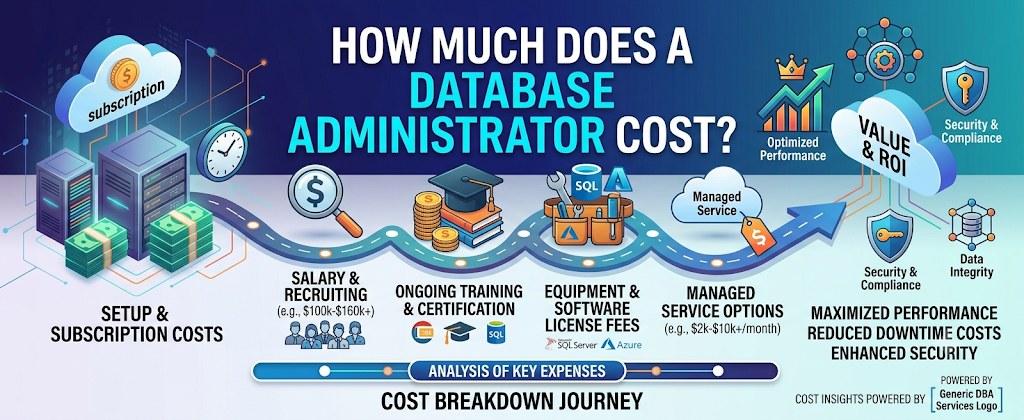
The answer depends on several factors, including the size of your database environment, the technologies involved, the level of support required and whether you choose an in-house DBA, contractor or managed database services provider.
In this article, we explore the costs associated with database administration in 2026 and the factors businesses should consider when evaluating their options.
What Does a Database Administrator Do?
A Database Administrator is responsible for ensuring databases remain secure, available, efficient and optimised.
Typical DBA responsibilities include:
- Database installation and configuration
- Performance monitoring and tuning
- Query optimisation
- Backup and recovery management
- Security administration
- Database migrations
- High availability and disaster recovery planning
- Capacity planning
- Database upgrades and patching
- Replication management
- Compliance and governance support
Modern DBAs often work across multiple platforms, including:
- Microsoft SQL Server
- PostgreSQL
- MySQL
- Oracle Database
- MongoDB
- Amazon RDS
- Azure SQL Database
- Google Cloud SQL
The Cost of Hiring an In-House Database Administrator
For many organisations, employing a dedicated DBA provides direct access to expertise and greater operational control.
Junior DBA
A junior DBA typically supports routine maintenance tasks and works under the guidance of more experienced professionals.
Typical UK salary range:
£30,000–£45,000 per year
Suitable for:
- Small database environments
- Basic administration requirements
- Internal support functions
Mid-Level DBA
A mid-level DBA manages production environments and takes responsibility for performance optimisation, backups and security management.
Typical UK salary range:
£45,000–£70,000 per year
Suitable for:
- Growing businesses
- Medium-sized database estates
- Cloud and hybrid environments
Senior DBA
Senior DBAs are responsible for complex database architectures, migrations, high availability solutions and strategic database planning.
Typical UK salary range:
£70,000–£100,000+ per year
Suitable for:
- Enterprise environments
- Business-critical applications
- Large-scale cloud deployments
- Regulatory compliance requirements
It’s important to remember that salary represents only part of the total employment cost.
Additional expenses may include:
- National Insurance contributions
- Pension contributions
- Annual leave
- Training and certifications
- Recruitment costs
- Employee benefits
As a result, the actual cost of employing a DBA is often significantly higher than the advertised salary.
The Cost of Contract Database Administrators
Many organisations engage contract DBAs for short-term projects or specialist expertise.
Typical contractor rates in the UK range from:
£350–£900+ per day
Rates vary depending on:
- Technology stack
- Industry experience
- Project complexity
- Security clearance requirements
- Cloud expertise
Contract DBAs are often used for:
- Database migrations
- Cloud transformation projects
- Performance tuning exercises
- Disaster recovery planning
- Major upgrades
While contractors provide flexibility, costs can escalate quickly for long-term engagements.
Managed Database Services: A Cost-Effective Alternative
Many organisations are moving towards managed database services as an alternative to maintaining a full-time internal DBA team.
Rather than hiring individual specialists, businesses gain access to a broader team of database professionals covering multiple areas of expertise.
Managed services commonly include:
- 24/7 monitoring
- Database performance tuning
- Security management
- Backup and recovery
- High availability support
- Database health checks
- Capacity planning
- Incident response
- Patch management
- Cloud database administration
For organisations requiring ongoing database support, managed services often provide predictable costs and wider technical coverage.
What Influences DBA Costs?
Several factors affect the overall cost of database administration.
Database Platform
Some platforms require more specialised expertise than others.
For example:
- Microsoft SQL Server
- Oracle Database
- PostgreSQL
- MySQL
- MongoDB
Each platform has its own administration requirements, tools and best practices.
Environment Complexity
A single database supporting an internal application requires considerably less effort than a highly available, multi-region database environment.
Factors increasing complexity include:
- Replication
- Clustering
- Data warehousing
- Hybrid cloud deployments
- Multi-cloud architectures
- Regulatory requirements
Availability Requirements
Businesses operating mission-critical systems often require:
- 24/7 monitoring
- High Availability (HA)
- Disaster Recovery (DR)
- Low Recovery Time Objectives (RTO)
- Low Recovery Point Objectives (RPO)
These requirements increase administrative effort and associated costs.
Cloud Database Management
Cloud platforms simplify infrastructure management but introduce additional administrative responsibilities.
Common cloud database services include:
- Amazon RDS
- Amazon Aurora
- Azure SQL Database
- Azure Managed Instance
- Google Cloud SQL
Cloud environments still require:
- Performance optimisation
- Cost management
- Security configuration
- Capacity planning
- Monitoring
Database Management Tools and Technologies
Effective database administration relies on specialised tools for monitoring, optimisation and automation.
Popular DBA tools include:
SQL Server
- SQL Server Management Studio (SSMS)
- Azure Data Studio
- SQL Server Profiler
- Redgate SQL Monitor
PostgreSQL
- pgAdmin
- PgBouncer
- pgBackRest
- Patroni
Monitoring and Observability
- Grafana
- Prometheus
- Datadog
- Dynatrace
- New Relic
- Percona Monitoring and Management (PMM)
Automation and DevOps
- Terraform
- Ansible
- Flyway
- Liquibase
- GitHub Actions
- Azure DevOps
These tools help organisations reduce manual administration and improve database reliability.
The Hidden Cost of Not Having a DBA
Many organisations delay investing in database administration until problems arise.
The consequences can include:
- Poor application performance
- Downtime
- Data loss
- Security vulnerabilities
- Compliance breaches
- Escalating cloud costs
- Failed migrations
In many cases, the cost of database issues far exceeds the cost of proactive administration.
Is a DBA Worth the Investment?
For organisations that rely on business-critical applications, customer data or transactional systems, professional database administration is rarely optional.
A skilled DBA helps organisations:
- Improve performance
- Reduce downtime
- Strengthen security
- Optimise infrastructure costs
- Support business continuity
- Enable future growth
The value delivered often extends well beyond the direct cost of the role itself.
Conclusion
The cost of a Database Administrator in 2026 varies significantly depending on experience, technology requirements and the complexity of your environment. While in-house DBAs typically command salaries ranging from £30,000 to over £100,000 per year, contractors and managed database services provide alternative models that may better suit specific business needs.
Rather than focusing solely on salary or service costs, organisations should consider the broader impact of effective database management on performance, security, availability and operational efficiency. A well-managed database environment not only reduces risk but also provides the stable foundation needed to support long-term business growth and digital transformation initiatives.