In modern data systems, performance and efficiency are not just about how fast you can query data—they also depend on how well that data is stored and maintained over time. One critical yet often overlooked concept in this space is data compaction. While it operates behind the scenes, compaction plays a vital role in keeping databases performant, cost-efficient, and scalable.
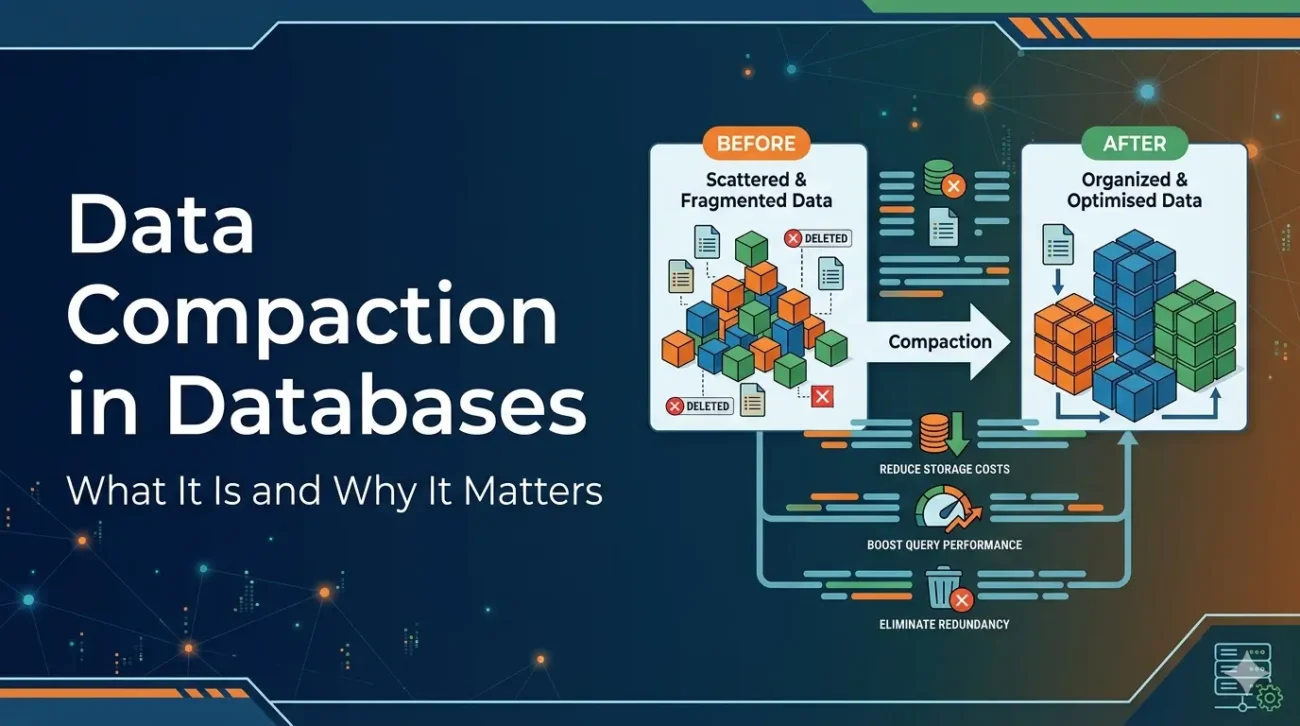
Data compaction refers to the process of reorganising and optimising stored data to reduce fragmentation, eliminate redundancy, and improve access efficiency. Over time, as data is continuously written, updated, and deleted, storage systems become fragmented. Small files accumulate, outdated records linger, and metadata grows increasingly complex. Without compaction, this leads to slower queries, higher storage costs, and degraded system performance.
At its core, compaction ensures that data remains clean, structured, and optimised for fast retrieval. It works by merging smaller data files into larger ones, removing duplicate or obsolete entries, and reorganising how data is physically stored. This process is especially important in distributed databases and data lake architectures, where data is written in batches or streams and stored across multiple nodes.
One of the primary benefits of data compaction is improved query performance. When data is scattered across many small files, query engines must scan and process each file individually. This increases latency and consumes more compute resources. Compaction reduces the number of files and aligns data structures, allowing queries to execute more efficiently with fewer read operations.
Cost optimisation is another major advantage. In cloud environments where storage and compute are billed based on usage, inefficient data layouts can significantly increase expenses. By consolidating files and removing unnecessary data, compaction reduces the amount of data that needs to be scanned and stored, directly lowering operational costs.
Data consistency and reliability also improve with proper compaction. Many modern databases use append-only storage models, where updates do not overwrite existing data but instead create new versions. Compaction helps reconcile these versions, ensuring that only the most relevant and accurate data is retained for queries. This is particularly important for systems that require strong data integrity and accurate reporting.
There are different types of compaction strategies, each suited to specific use cases. Minor compaction typically merges small files into slightly larger ones, improving read efficiency without significant resource usage. Major compaction, on the other hand, performs deeper optimisation by merging large datasets, removing deleted records, and restructuring storage. While more resource-intensive, major compaction delivers greater long-term performance benefits.
However, compaction is not without its challenges. It requires careful scheduling and resource management, as running compaction processes can temporarily consume compute and impact system performance. Poorly configured compaction strategies may lead to delays, increased latency, or even system instability. This is why modern data platforms often use automated and intelligent compaction mechanisms to balance performance and resource usage.
Another important consideration is the frequency of compaction. Running it too often can waste resources, while running it too infrequently allows inefficiencies to accumulate. The right balance depends on factors such as data volume, ingestion rate, and query patterns. Organisations must monitor system behaviour and adjust compaction strategies accordingly to maintain optimal performance.
In real-time and streaming environments, compaction becomes even more critical. Continuous data ingestion generates a high volume of small files and incremental updates. Without regular compaction, these systems can quickly become inefficient, leading to increased latency and reduced responsiveness. Effective compaction ensures that real-time analytics remain fast, reliable, and scalable.
Ultimately, data compaction is a foundational element of modern data management. It ensures that databases remain efficient as they grow, supports faster analytics, and reduces operational costs. While it may not be visible to end users, its impact is felt across every layer of the data ecosystem.
As organisations continue to scale their data infrastructure, ignoring compaction is no longer an option. A well-implemented compaction strategy enables cleaner data storage, better performance, and more predictable costs—making it essential for any business that relies on data to drive decisions.