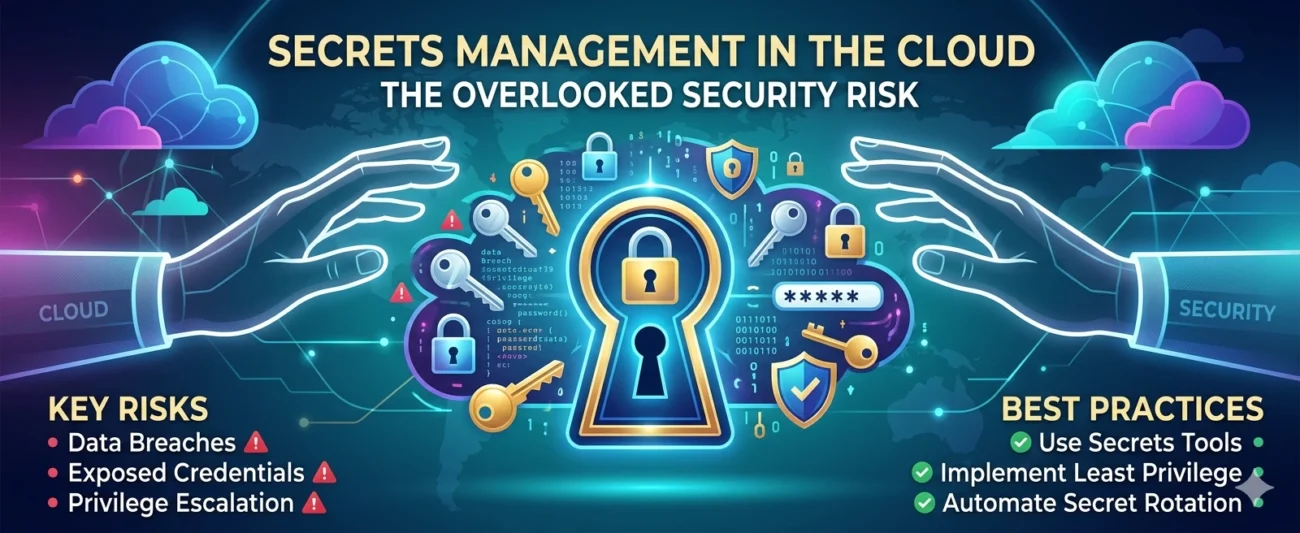
Cloud adoption has transformed how organisations build, deploy and scale applications. Yet, amid the focus on performance, cost optimisation and rapid delivery, one critical security concern is often neglected: secrets management. From API keys and database credentials to encryption keys and tokens, secrets are the silent gatekeepers of modern infrastructure. When mishandled, they become one of the most dangerous vulnerabilities in a cloud environment.
What Are “Secrets” in the Cloud?
In simple terms, secrets are sensitive pieces of information that systems use to authenticate and communicate securely. These include:
- API keys
- Database usernames and passwords
- SSH keys
- OAuth tokens
- Encryption keys
Unlike standard configuration data, secrets must remain confidential at all times. However, in many organisations, they are still stored in plaintext files, hardcoded into applications, or shared informally across teams—creating significant risk.
Why Secrets Management Is Often Overlooked
Despite its importance, secrets management rarely receives the attention it deserves. There are a few reasons for this:
1. Developer Convenience Over Security
Developers often prioritise speed and ease of deployment. Hardcoding credentials or storing them in environment variables may seem harmless in the short term, but it creates long-term exposure.
2. Lack of Centralised Control
In multi-cloud or hybrid environments, secrets can become scattered across platforms, making governance and visibility difficult.
3. Misplaced Confidence in Cloud Providers
While cloud providers offer secure infrastructure, they operate under a shared responsibility model. Protecting secrets remains the organisation’s responsibility.
The Risks of Poor Secrets Management
Failing to properly manage secrets can have severe consequences:
Data Breaches
Exposed credentials can provide attackers with direct access to databases, applications, or entire cloud environments.
Privilege Escalation
Poorly managed secrets may grant excessive permissions, allowing attackers to move laterally within systems.
Compliance Violations
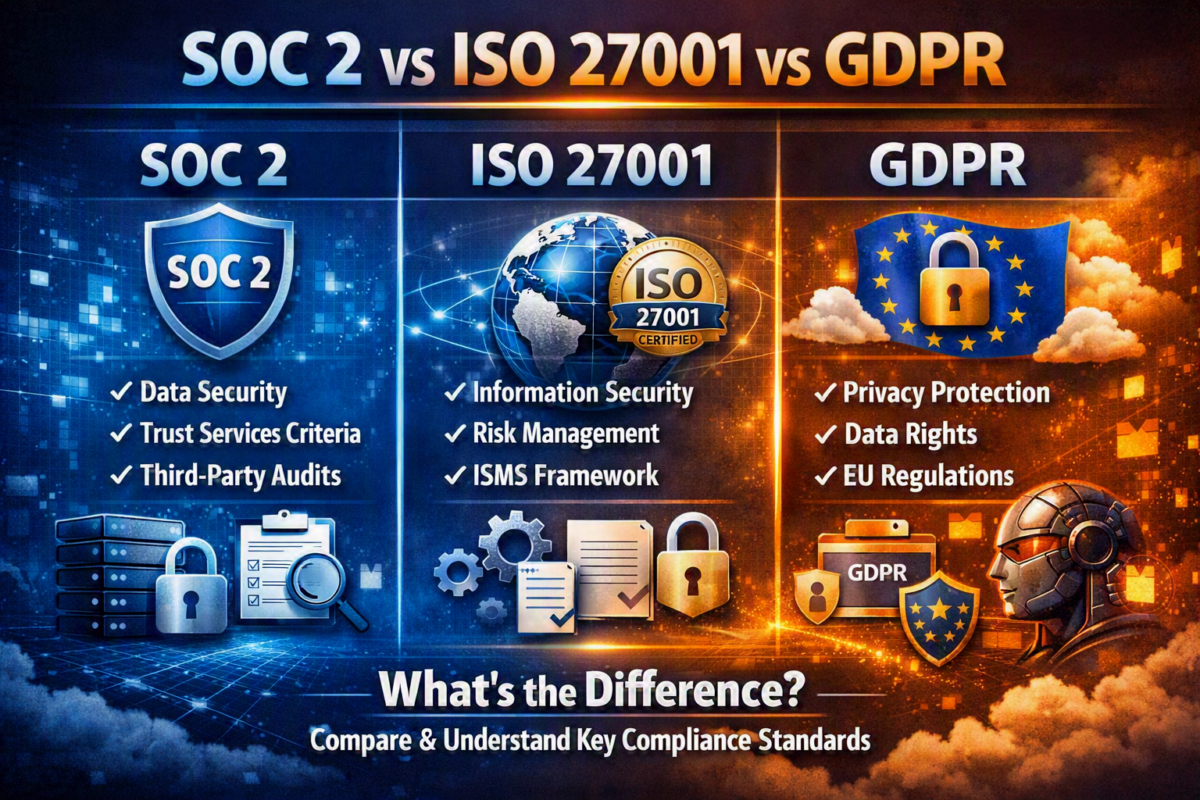
Regulations such as GDPR and ISO standards require strict control over sensitive information. Weak secrets management can lead to non-compliance and penalties.
Operational Disruption
Compromised secrets can result in service outages, data loss, and reputational damage.
Common Mistakes Organisations Make
Many organisations unknowingly expose themselves through avoidable practices:
- Storing secrets in source code repositories
- Sharing credentials via email or messaging platforms
- Failing to rotate secrets regularly
- Using the same credentials across multiple systems
- Lack of audit trails and monitoring
These issues are especially prevalent in fast-moving DevOps environments where security controls struggle to keep pace with development.
Best Practices for Effective Secrets Management
To mitigate these risks, organisations must adopt a structured and proactive approach.
Use Dedicated Secrets Management Tools
Modern solutions such as vault-based systems provide secure storage, encryption, and controlled access to secrets. They eliminate the need for hardcoding and reduce human error.
Implement Least Privilege Access
Access to secrets should be restricted strictly to what is necessary. Role-based access control (RBAC) ensures that users and services only have the permissions they require.
Automate Secret Rotation
Regularly rotating credentials reduces the window of opportunity for attackers. Automation ensures this process is consistent and not dependent on manual intervention.
Encrypt Secrets Everywhere
Secrets should be encrypted both at rest and in transit. Strong encryption standards must be enforced across all environments.
Monitor and Audit Access
Maintain detailed logs of who accessed which secrets and when. Continuous monitoring helps detect suspicious behaviour early.
Integrate Security into DevOps
Secrets management should be embedded into CI/CD pipelines. This ensures secure handling throughout the software development lifecycle.
The Role of Culture and Governance
Technology alone cannot solve the problem. Organisations must foster a security-first culture where developers, engineers, and leadership understand the importance of protecting secrets. Clear policies, training, and accountability are essential.
Governance frameworks such as ISO/IEC 27001 and ISO/IEC 27017 emphasise secure handling of sensitive information, including credentials. Aligning secrets management practices with these standards strengthens overall security posture.
Looking Ahead: Secrets in a Zero Trust World
As organisations move towards Zero Trust architectures, the importance of secrets management will only increase. Every request, system, and user must be authenticated and verified, placing secrets at the centre of the security strategy.
Emerging trends such as short-lived credentials, identity-based access, and automated secret injection are helping reduce reliance on static secrets. However, these approaches require careful implementation and continuous oversight.
Conclusion
Secrets management is no longer a niche concern—it is a fundamental pillar of cloud security. Ignoring it leaves organisations exposed to some of the most preventable yet damaging threats.
By adopting robust tools, enforcing strict access controls, and embedding security into everyday workflows, organisations can significantly reduce risk. In a landscape where breaches are increasingly sophisticated, protecting secrets is not just best practice—it is essential.