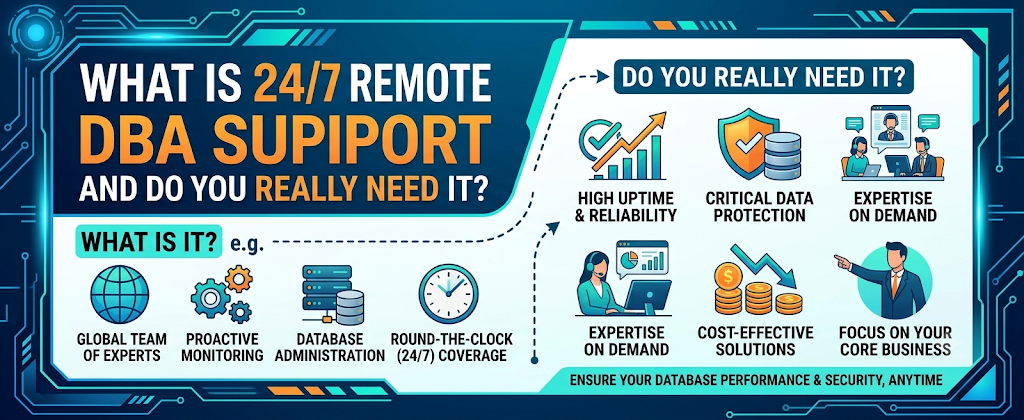
What Is 24/7 Remote DBA Support?
24/7 Remote DBA Support is a managed database service that provides continuous oversight of database systems, regardless of the time of day.
Rather than relying solely on internal IT resources, organisations gain access to specialist database administrators who monitor, maintain and optimise database environments remotely.
These services typically support a wide range of database technologies, including:
- Microsoft SQL Server
- PostgreSQL
- MySQL
- Oracle Database
- MariaDB
- MongoDB
- Redis
- Cassandra
The primary objective is to ensure databases remain secure, available, performant and fully operational at all times.
What Does a Remote DBA Team Actually Do?
Many organisations assume DBA support is only required when something breaks. In reality, the most valuable database administration work happens before issues occur.
Continuous Monitoring
Remote DBA teams use monitoring and observability tools to track database health in real time.
Common tools include:
- Redgate SQL Monitor
- SolarWinds Database Performance Analyzer
- Percona Monitoring and Management (PMM)
- Grafana
- Prometheus
- Datadog
- New Relic
- Oracle Enterprise Manager
These platforms provide visibility into:
- Query performance
- CPU utilisation
- Memory consumption
- Storage growth
- Replication status
- Database availability
- Backup success rates
Performance Optimisation
Database performance can deteriorate gradually as workloads increase.
A remote DBA proactively identifies:
- Slow-running SQL queries
- Missing indexes
- Index fragmentation
- Resource bottlenecks
- Locking and blocking issues
- Inefficient execution plans
Regular optimisation helps maintain application responsiveness and reduces infrastructure costs.
Backup and Recovery Management
Backups are only valuable if they can be successfully restored.
Remote DBA services typically include:
- Backup monitoring
- Recovery testing
- Disaster recovery planning
- Recovery Point Objective (RPO) reviews
- Recovery Time Objective (RTO) assessments
This ensures organisations are prepared for unexpected incidents.
Security Management
Database security remains a growing concern for organisations handling sensitive information.
Remote DBA teams support:
- Role-Based Access Control (RBAC)
- Multi-Factor Authentication (MFA)
- Transparent Data Encryption (TDE)
- Database patching
- Vulnerability assessments
- Audit logging
These measures help reduce security risks while supporting compliance requirements.
Why Database Downtime Is More Expensive Than Many Organisations Realise
For many businesses, databases underpin critical services.
When a database becomes unavailable, the consequences may include:
- Lost revenue
- Interrupted customer transactions
- Reduced employee productivity
- Service level agreement breaches
- Reputational damage
- Regulatory risks
Even relatively short outages can have significant operational and financial consequences.
A major benefit of 24/7 support is the ability to detect and resolve issues before they escalate into full-scale incidents.
Signs Your Business May Need 24/7 Remote DBA Support
Not every organisation requires around-the-clock database administration. However, several indicators suggest continuous support may be beneficial.
Your Applications Operate Outside Standard Business Hours
If customers, employees or systems rely on databases during evenings, weekends or public holidays, issues occurring outside office hours can still have a significant impact.
You Operate Customer-Facing Platforms
eCommerce websites, customer portals, mobile applications and SaaS platforms depend heavily on database availability and performance.
Downtime directly affects user experience and revenue generation.
Your Business Relies on Cloud Databases
Cloud environments offer scalability but still require active management.
Services such as:
- Amazon RDS
- Amazon Aurora
- Azure SQL Database
- Azure Database for PostgreSQL
- Google Cloud SQL
benefit from ongoing monitoring, optimisation and cost management.
You Have Limited Internal DBA Resources
Many organisations rely on developers, infrastructure engineers or IT managers to oversee databases.
While highly capable, these teams often have broader responsibilities and may lack specialist database expertise.
Compliance and Security Are Business Priorities
Industries subject to regulations such as:
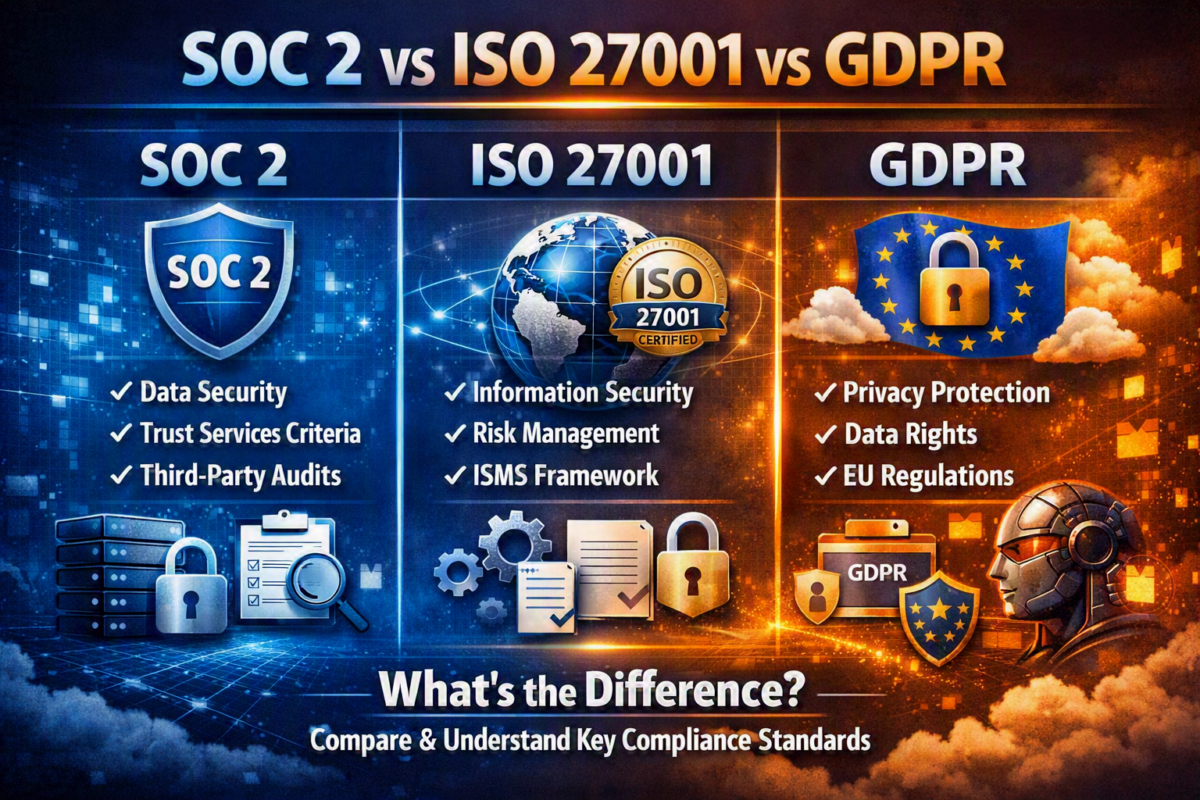
- UK GDPR
- ISO 27001
- PCI DSS
- Cyber Essentials
Often require stronger controls, monitoring and auditability than internal teams can consistently provide.
The Role of Automation in Modern DBA Support
Today’s remote DBA services combine human expertise with automation.
Tools such as:
- Flyway
- Liquibase
- Terraform
- Ansible
- Jenkins
- Azure DevOps
- GitHub Actions
support:
- Automated deployments
- Database schema management
- Configuration consistency
- Change tracking
- Infrastructure as Code (IaC)
Automation improves reliability while reducing manual intervention and deployment risk.
24/7 Support vs Business-Hours Support
The appropriate support model depends on business requirements.
Business-Hours DBA Support May Be Suitable If:
- Systems are used primarily during office hours.
- Downtime outside business hours has minimal impact.
- Database environments are relatively simple.
- Internal teams can manage after-hours incidents.
24/7 DBA Support Is Often Recommended If:
- Databases support revenue-generating services.
- Users access systems around the clock.
- High availability is a business requirement.
- Downtime creates operational or financial risk.
- Regulatory obligations require continuous oversight.
For many organisations, the decision ultimately comes down to balancing risk against the cost of proactive support.
The Strategic Benefits of Remote DBA Services
Beyond incident response, remote DBA support delivers long-term operational value. Benefits include:
- Improved database performance
- Reduced downtime
- Enhanced security posture
- Better backup and recovery preparedness
- Lower infrastructure costs
- Increased operational efficiency
- Access to specialist expertise
- Stronger database governance
As database environments continue to grow in complexity, specialist support can help organisations maintain performance while allowing internal teams to focus on strategic initiatives.
Conclusion
Databases are among the most critical components of modern IT infrastructure, supporting everything from customer-facing applications and business intelligence platforms to internal operational systems.
While not every organisation requires 24/7 DBA coverage, businesses operating mission-critical, revenue-generating or always-on services should carefully evaluate the risks associated with limited database support. Continuous monitoring, proactive optimisation, robust security controls and rapid incident response can significantly reduce operational risk and improve overall system reliability.
For organisations where database performance and availability directly influence business success, 24/7 Remote DBA Support is often less of a luxury and more of a strategic necessity.