Cloud adoption is no longer optional—it’s essential for organizations aiming to streamline operations and improve efficiency. However, simply migrating to the cloud isn’t enough. Without the right expertise, businesses often struggle to realize the full value of their cloud investments.
An experienced cloud specialist helps you assess, implement, and optimize your cloud environment to ensure maximum return on investment while minimizing risks.
Why Expert-Led Cloud Management Matters
Poor infrastructure management can lead to frequent outages, downtime, and performance issues. Slow systems, errors, and lagging applications negatively impact user experience and productivity. For example, a banking platform with poor performance can drive customers to competitors, while an e-commerce site facing downtime during peak seasons risks losing revenue and trust.
To avoid these challenges, businesses need a strategic approach to cloud management.
What is Smart Cloud Management?
Smart cloud management combines advanced technologies such as artificial intelligence, automation, analytics, and machine learning to provide complete control over cloud environments. It enables IT teams to:
- Monitor workloads and traffic in real time
- Optimize resource allocation
- Automate routine operations
- Gain actionable insights into usage and costs
- Improve system performance and reliability
With the right platform and expert guidance, organizations can adapt their infrastructure to evolving business needs while maintaining efficiency and scalability.
Key Parameters to Evaluate Cloud Value
A well-implemented cloud management platform delivers measurable benefits:
- Saves IT time and effort: Centralized systems and subscription-based services reduce manual workload.
- Enables real-time data capture: Supports mobile and on-the-go business operations.
- Simplifies data sharing: Integrates departments through a unified data ecosystem.
- Improves project and client management: Enhances collaboration and workflow efficiency.
- Supports pay-as-you-use models: Optimizes costs with flexible consumption-based pricing.
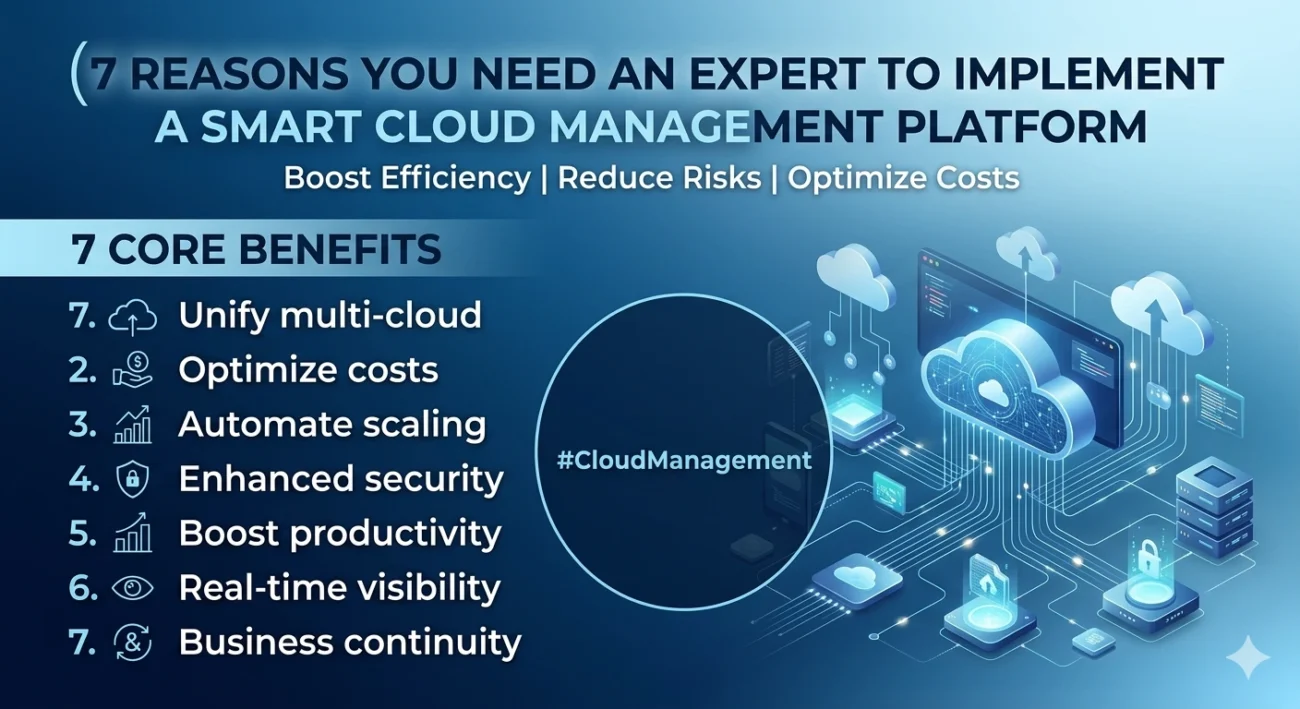
7 Core Benefits of Smart Cloud Management Platforms
1. Streamlined IT Operations
A unified control panel simplifies multi-cloud management, reducing complexity and freeing IT teams to focus on strategic initiatives.
2. Cost Optimization
Real-time visibility into resource usage helps identify inefficiencies and implement automated cost-saving strategies.
3. Efficient Resource Allocation
Advanced monitoring and analytics ensure optimal use of cloud resources, improving performance while reducing waste.
4. Enhanced Security and Compliance
Built-in security frameworks and automated governance help maintain compliance and protect against data breaches.
5. Increased Productivity
Automation enables faster provisioning, deployment, and scaling of resources, allowing businesses to respond quickly to changing demands.
6. Performance Monitoring
Continuous monitoring helps identify bottlenecks and maintain seamless system performance for better user experiences.
7. Business Continuity and Disaster Recovery
Robust backup and recovery solutions ensure data availability and minimize disruptions during unexpected events.
Conclusion
Investing in smart cloud management—guided by experienced professionals—is critical to avoiding operational risks and maximizing business outcomes. With proactive monitoring, strong security practices, and optimized resource utilization, organizations can enhance performance, reliability, and scalability.
A well-managed cloud environment doesn’t just support your business—it empowers it to grow, innovate, and stay competitive in a rapidly evolving digital landscape.